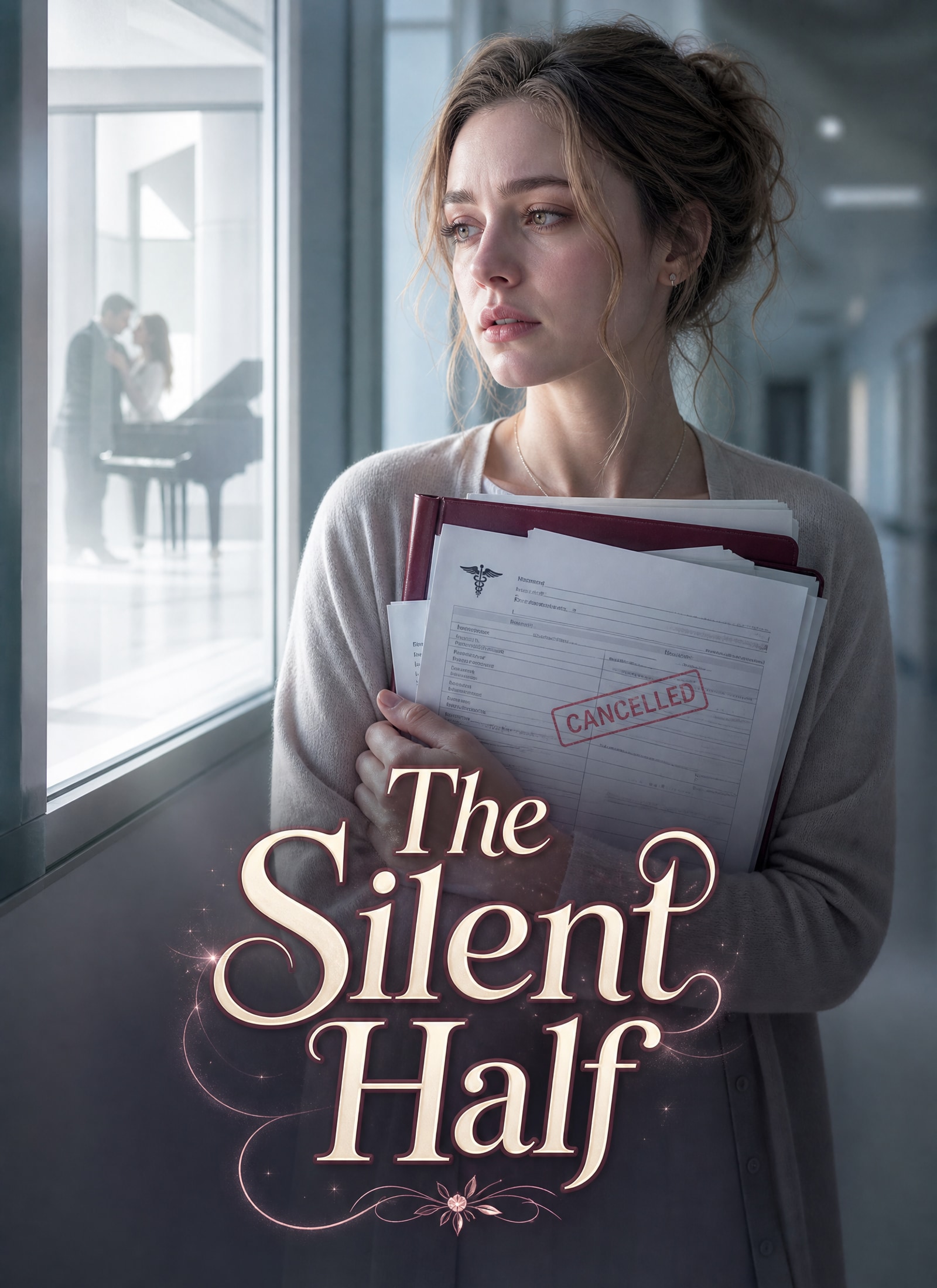
My little sister set off a mortar-style firework next to my right ear the summer I turned eighteen. At my Juilliard live audition three weeks later, I couldn't hear the accompaniment. The panel marked me failed audition. Three years of practice. One botched audition away from the conservatory I'd built my whole life around. Afterward, my parents put Nina on a plane to Paris. Our brother Julian deleted every trace of her from his phone. Even Sebastian swore he'd never see her again. For seven years, I believed they loved me enough to punish her. Then Nina graduated. And came home. My mother pressed the car keys into my palm. "Go pick up your sister." I glanced at the reminder on my phone. My senior recital jury was that afternoon. "I can't. My defense is at three." The living room fell still. My mother's eyes filled. "Seven years, Wren. Seven years alone in Paris. Sick alone. Every birthday alone. She didn't even come home when Grandma was dying. And you still can't let her go?" My father set down his coffee, a muscle working in his jaw. "She was wrong back then. But you still went to college, didn't you? You're about to graduate. So you lost hearing in one ear — you have a future. She lost seven years of home." Julian, in the doorway, cold and low: "You just missed one school. She lost an entire family." And Sebastian — Seb, who'd been silent until now. "And me. Seven years. I didn't see her. Didn't hold her. Didn't spend a single birthday with her. Wren, we were supposed to get engaged next spring. Our mothers already picked out the venue." "Why can't you give her a way home? Do you need her to die out there before it's enough?" My world was already missing half its sound. That was the moment the other half went silent, too. That night, I logged into the university portal and changed my post-graduation placement to the city farthest from home. From then on — the daughter they'd been waiting for, the seven-year performance of guilt — none of it had anything to do with me anymore. …… The morning Nina flew in from Paris, my mother knocked on my door before sunrise and set a ring of keys on my desk. "Wren, sweetheart. Air out the south room upstairs. Your sister loves the light." I looked up slowly. The south room used to be my practice room. Seven years ago, after my right ear went dark for good, they'd draped the piano, the barre, the music stands in white sheets. My mother had held me and cried. “Don't look, Wren. It'll only hurt.” I believed her. I thought they locked the door because the sight of it might break me. By noon, the sheets were gone. Sunlight poured across the lacquered Steinway. My mother directed our housekeeper, Marta, herself — white roses on the lid, lily-of-the-valley diffusers on the sill, curtains swapped for the pale pink Nina had loved when she was twelve. I stood in the doorway and understood, finally, that the piano had never been untouchable. It had only been untouchable by me. My father was in the foyer, hanging a banner across the archway. Cream linen, gold script. WELCOME HOME, NINA. Julian came downstairs in a fitted suit, keys already in hand. He was driving to JFK himself. Sebastian had promised, weeks ago, to sit in on my recital jury that afternoon. At 9:43, my phone lit up. 【Nina just landed. She's fragile. I'm going with your parents.】 I stared at it a long time. 【Okay.】 I didn't argue. I didn't ask. I already knew the answer. I went back to my room to grab my defense folder. My mother had asked me the week before to pull an old insurance statement off the family drive for her accountant, and I'd never logged out. When I opened the shared folder to find the file, something else blinked awake at the top of the screen. Nina — Paris. Julian's account. Still signed in. Still syncing. I meant to close it. My cursor hovered a full minute. Then I clicked. It wasn't seven years of exile. It was seven years of birthday parties. Ski trips in Chamonix. Christmas mornings in an apartment I'd never seen, a fireplace I didn't recognize, gifts stacked wall to wall. My mother on FaceTime, dabbing her eyes: "Sweetheart, we're not abandoning you. Just a little longer, okay?" Nina, red-eyed: "Does she still hate me?" My father, sighing: "Give her time. When she stops hurting so much, we'll bring you home." Handwritten Christmas cards from my mother. Seven of them. One a year. Julian's passport photos, uploaded and dated — every winter, every summer, the same country code stamped in the corner. And at the bottom of the folder — a photograph. Nina in a white recital dress in a Paris concert hall, arms full of roses. Sebastian behind her. Holding her coat. Nina played again tonight. Seb says she was so brave. My fingertips went cold from the tips down. Seven years ago, in a hospital bed, Sebastian had held my hand and promised he'd never see her. He hadn't stopped seeing her. He'd only stopped letting me know. I sat there a long time before I remembered the hospital. The night after my last scan, the doctor had told my parents I shouldn't be left alone; the pain spiked without warning, and someone needed to watch for pressure on the nerve. My mother said she'd cried all day. She was too tired. She'd come back in the morning. My father had a meeting. Julian had a school event. Sebastian said something urgent had come up at work — just be a good girl, Wren. I lay in that bed with my right ear packed and roaring, the world split clean down the middle — noise on the left, dead air on the right. I couldn't sleep. I kept checking my phone. Nobody messaged me. I know now what they were doing. They were on a group video call, singing to Nina. …… That afternoon, at my recital jury, a professor asked me a question from the right side of the room. I answered a beat too late. Someone in the third row laughed under their breath. I steadied my breath and answered again, but my chest had gone tight, as if a hand had closed around my ribs and refused to open. When I stepped down, the family group chat had already lit up. A photograph. My parents, Julian, Sebastian, all crowded around Nina at my piano. White roses behind them. Nina at the keys, tears shining in her lashes. My mother's caption: Seven years. Our baby's finally home. I set my phone face down on the desk. They hadn't punished her for seven years. They'd hidden her — and loved her — for seven years.
I didn't go home after the jury. I went to the hospital where they'd treated my ear seven years ago. I only meant to request a copy of my audiology records — the placement office needed proof of disability for the paperwork. But the doctor recognized me the moment I walked in. The first thing he said wasn't hello. "Why did you never come back for the second-stage nerve reconstruction?" I stared at him. "The what?" He frowned and pulled up my old file. The lines scrolled down the screen, one after another. Auditory nerve — not fully necrotic. Surgery within three months. Recovery probability: 70%+. Procedure cost: $180,000. Deposit paid in full. Insurance: will not cover experimental nerve-graft component. Balance to be private-pay. Payer of record: my father. Co-signer on payment and insurance appeal: Sebastian Cole. My chest went hot, then cold. They had been that close to saving me. I scrolled to the next page. Deferral of Procedure — Signed. Date of cancellation: the day before Nina flew to Paris. Reason listed: Family unable to proceed at this time due to overseas conservatory tuition and instrument purchase for younger daughter. Procedure indefinitely postponed. The doctor sighed. "I warned your mother. I told her the recovery window on that kind of nerve damage was very narrow. Once you missed it, we couldn't guarantee anything." He looked at me carefully. "She said Nina was in a very fragile state. That she had to go abroad immediately to heal. That they were buying her a new piano so she could start over." I gripped the printout. My fingers had gone numb. He kept going, gently. "Your mother was crying, Ms. Ashford. She said — she said you'd already lost one ear. But if Nina couldn't play, her whole life would be over." I laughed. I don't know why. It wasn't that my ear couldn't have been saved. It was that they had signed it away themselves — pulled my name off the surgical schedule with their own hands. It wasn't that they couldn't come up with a hundred and eighty thousand dollars. It was that they had decided the chance of me hearing the world again was worth less than a new piano for Nina. …… When I got home, Nina was sitting in the living room, unwrapping gifts. Pale silk dress. Cheeks pink. That same small, hesitant voice. "Wren. You're home." Beside her stood a brand-new Steinway upright — pale wood, red ribbon still looped around the leg. My mother beamed. "Nina's welcome-home present. She hasn't touched a piano in this house in seven years." My father chuckled. "Play whenever you want, sweetheart. It's yours." Julian ruffled her hair. "You worked so hard, starting over in Paris. It's about time you played at home again." Sebastian was crouched by the bench, adjusting the height for her. I remembered, in that moment, seven years ago — Sebastian sitting on the edge of my hospital bed, holding my hand. "I'll be your right ear, Wren. I promise." I understood now. He, too, had decided that Nina's chance to play again mattered more than my chance to hear again. I walked over to the piano. I set the copies down on the lid. The paper was thin. Almost weightless. But when it landed, it hit the room like a slap. Silence. My mother's face changed. "Why did you go digging around at the hospital?" I met her eyes. "So seven years ago, I could have been treated. Is that right?" Nina's eyes filled instantly. She stood up. "Wren — if you think I took your surgery from you, I'll never touch a piano again. I swear." My mother pulled her in, held her tight. "It wasn't your fault, sweetheart. That was our decision as parents." My father's jaw set. He gestured at the housekeeper. "Marta, get these papers off Nina's piano. She doesn't need to see this today." I watched Marta lift the copies away like they were something dirty. I looked at the new Steinway, gleaming under the chandelier. Seven years ago, I had lost my right ear. She had lost her nerve to play. And in the end, the thing they'd chosen to rescue was her nerve. The thing they'd chosen to give up was my life.
My mother threw Nina's welcome-home dinner at the house. "She just got off a long flight," she said. "She can't handle anywhere loud." But the dining table was covered in everything Nina loved. Lobster bisque. Crab cakes. Mango sorbet. A cold Thai peanut salad, glossy with dressing. I'm allergic to shellfish. Allergic to mango. Allergic to peanuts. The doctor had warned me seven years ago — an allergic reaction could spike my tinnitus, could throw off my balance, could make the vertigo worse. My mother was too busy cracking lobster tail for Nina to notice. My father slid the only bowl of plain broth in front of Nina. Julian reached across the table and took the small salad plate meant for me. "Nina just got in. Let her have something gentle." I was seated closest to the door. My right side was aimed straight at the speaker. There wasn't even a clean set of silverware in front of me. Sebastian noticed. He half-turned to ask Marta to set another place. Nina's eyes filled before he could open his mouth. "Is Wren still angry with me? Is that why she won't eat?" Sebastian's hand froze mid-motion. In the end, he just slid his own water glass across the table toward me. "Here. Drink something." I looked at the glass. I didn't touch it. Halfway through dinner, Nina reached under her chair and pulled out a small box. She slid it across the tablecloth to me, both hands, the way you'd offer something delicate. "Wren. This is for you. It's overdue." Inside was a pair of headphones. Old. The paint chipped off in patches. The cable insulation split down the sides. Yellowed masking tape held the jack together. My mother's eyes shone. "It's the thought that counts." My father nodded. "She just got back. She doesn't have money of her own yet. The fact that she was thinking of you at all — that's more than enough." Julian: "It's not about the price. It's about her humbling herself." Sebastian, low, meant only for me: "Just accept it. Don't embarrass her in front of everyone." I hadn't opened my mouth yet when my phone buzzed. A Chase alert. Purchase — $980.00 — LOWER EAST VINTAGE, NY. The account I'd been saving for my ear follow-up. I looked up at Nina. At the chipped, taped-together headphones on the table between us. "You used my money to buy me garbage," I said. "And you're calling that an apology?" Nina went pale. Tears fell instantly. "Wren — I didn't know that card was yours. I only wanted to make it right." Something in me finally cracked. "You blew out my ear. You took my surgery. And now you can't even afford to say sorry without charging it to my account." The room went still. Nina pressed both hands to her chest and gasped like she couldn't breathe. Tears kept falling. My father slammed his palm on the table so hard the crystal jumped. "Wren!" "Are you trying to break her on her first night home?" The ringing in my left ear spiked, thin and metallic. My mother pulled Nina against her shoulder and started to cry. Julian stepped between us, cold-eyed. Even Sebastian frowned. "Wren. Stop provoking her." Nina reached, sobbing, for the little box beside her plate. She flipped the lid. "I'll — I'll put on a song Wren used to love. When we were little. So we can all stop fighting." A music box. Then it began to play. Not a lullaby. The Chopin Ballade No. 1 in G minor. The piece I had practiced for three years. The piece I had played at my Juilliard audition. The piece I had never been able to listen to since. The first four bars registered in my left ear — the melody I hadn't heard in seven years, thin and mocking through a cheap tin speaker. My tinnitus surged like a wire pulled tight. The room tilted. The vertigo hit me the way the doctor had warned me it would — sound and memory colliding at once, my balance shearing off between one breath and the next. I stumbled backward, caught the edge of the sideboard, and went down into shattered crystal. Glass opened my palm. Something warm slid down the side of my neck from my ear — the old scar tissue, split open where I'd struck the corner of the sideboard on the way down. Sebastian's body jerked toward me instinctively — one step. Nina shrieked. "My hand! Oh God, my hand!" Sebastian's hand hung in the air. Then he turned. And put his body between Nina and the broken glass.
Watch? https://cps-front.novelix.live/app-api/ext/new/202607282D4m5IMx7l ? Continue the story here ?? ? Download the "Novelix" app ? search for "ni720212", and watch the full series ✨! #Novelix